




Solving India’s Education Crisis
Solving India’s Education Crisis
Mangalore Today News Network
By Dr. G. Shreekumar Menon
Mangaluru, June 5, 2026: The Japanese have an interesting term called “Gakusei no Fukushū” meaning "student’s revenge," often used when referring to a storyline involving a student taking vengeance. The results of Joint Entrance Examination (JEE) Advanced 2026, the entrance test for admission to the Indian Institutes of Technology (IITs), were declared on June 1st 2026, which brought into the spotlight, the role of Kota city coaching centres in Rajasthan, in producing toppers in droves.

Conducted by IIT Roorkee this year, the results were released several hours ahead of the scheduled announcement at 10 AM on Monday. This year, Kota once again produced the All India Rank-1 (AIR-1) holder for the third successive time. Two other Kota students secured AIR-2 and AIR-7, highlighting the city’s continued dominance in IIT entrance preparation. The coaching institutions credit Kota’s academic ecosystem, experienced faculty, study resources, and competitive environment for consistently producing top performers and IIT entrants across all ranks. However, this success is heavily overshadowed by severe criticism of the city’s brutal study culture, extreme academic pressure, and mental health crises, taking a heavy toll on the lives of students. Many students are committing suicide unable to bear the intense pressure to study.
Indian Youth needs to get over the JEE and UPSC Civil Services, as their life goal and mission. There is life and success beyond and without these. Youth need not sacrifice their mental health and wellbeing for going behind competitive exams under society’s pressure. The problem with these kind of competitive examinations is that the vast majority who are unable to crack them, become depressed, and carry the failure as a life-long burden. The stigma of being an unsuccessful person hits them early in their youth, crippling their innovative spirit and perseverance.
Over 13 lakh students appear for the JEE Main exam annually, with around 2.5 lakh qualifying to write the JEE Advanced. Of the candidates who take the Advanced exam, approximately 30% clear it to compete for seats in the premier Indian Institutes of Technology (IITs). Over 22 lakh candidates register and appear for the NEET (UG) examination every year. Out of these, roughly 55% to 56% of the test-takers successfully clear the examination by meeting the minimum qualifying cut-off criteria.
Similarly, approximately 11 to 13 lakh candidates apply for the UPSC Civil Services Examination (CSE) annually, but only about 50% to 55% of applicants actually appear for the Preliminary Exam stage. Out of those who take the exam, less than 0.2% make it through all the three gruelling stages to clear it.
The selection process funnels down dramatically at every level.
• Preliminary Exam: Around 5 to 6 lakh candidates actually appear, with just about 14,000 to 15,000 qualifying for the Main Examination.
• Mains Exam: These shortlisted candidates appear for the written Mains, and only 2,500 to 3,000 candidates manage to reach the interview phase.
• Final Selection (Interview & Merit List): Only about 700 to 1,200 candidates are finally selected for services like IAS, IPS, IFS, IRS etc depending on the number of vacancies announced that year.
The student community grapples with high rate of failures because of these insanely competitive examinations, and society itself gets dumped with future citizens who are already stamped with the seal of failure. Those who clear the exams, whether on merit or otherwise, get perverted and idiosyncratic, because of the insane competition and the arduous study preparations involved. They end up as pompously arrogant and egoistic individuals.
Unfortunately, it is these massive failed student communities, forming the bulk of future citizens, who fall prey to drug and alcohol addiction. The extreme frustration and helplessness of the students, against the education system at all levels, is a major reason for high escalation in drug consumption. Add to this, the spectre of high levels of unemployment, high cost of living and inflation, it is no surprise that students and youngsters are seeking refuge in drugs and alcohol.
Another serious underlying problem, which is a direct offshoot of the insane competitive examinations are the emergence of coaching centres, for every kind of examination. Parents have to shell out huge fees, apart from facing the temptation of buying the leaked question papers, at astronomical prices. After this hurdle is crossed, entering professional colleges is another expensive proposition. High fees in private colleges and deemed to be universities, hostel fees, all adds up to over a crore of rupees, which is certainly beyond the reach of ordinary citizens. The loan sharks enter the scene, to add to the woes of the parents and students. Many students even commit suicide to escape the trauma of studying for a future!
Those male students who come out of this ordeal, get lured by tempting offers of fabulous dowry, in the marriage market. Who are offering these tempting dowries of several crores? These are tax evaders, liquor barons, politicians, high flying fixers and brokers. The government machinery gets compromised indirectly, as bureaucrats who are going to occupy high positions in the civil administration, have already been purchased in the marriage market. Is it possible to have a neutral administration, when key bureaucrats have formed ‘marriages of convenience’ with the unscrupulously wealthy?
Is there any point in making cosmetic changes in the administration, as done recently in CBSE Board? The Central Government has enacted a major administrative shake-up, transferring top Central Board of Secondary Education officials following severe backlash regarding the board’s new On-Screen Marking (OSM) evaluation system.
In an affidavit filed before the apex court, which is hearing pleas, seeking a direction to replace or restructure the National Testing Agency (NTA) with a robust and autonomous body to conduct the medical entrance examination, the NTA has claimed that it has acted in good faith, with due diligence and in accordance with law to safeguard the integrity of the national examination system and the interests of a very large majority of bona-fide aspirants whose effort and integrity is not in question, and will not be devalued.
Every year, most of the competitive examinations are getting routinely embroiled in controversies and scams. There is no point whatsoever in making bureaucratic reshuffling, without addressing the real underlying problems.
What can the government do? As far as medical education is concerned, the problem is, despite an abnormal intake of 250 students in every medical college, there is acute shortage, and inability to meet the soaring demand. There are approximately 1,28,976 MBBS seats across 818 medical colleges in India. These seats are divided between public institutions and private or deemed universities, all of which have to go through the national NEET-UG entrance and counselling processes. Over 22.05 lakh candidates appeared for the NEET-UG exam nationwide. The examination recorded 96.92% nationwide attendance against a massive registration of over 22.75 lakh candidates. How to cater to this abnormal demand which is a unique phenomenon only in India?
A sensible decision that the government can take is to conclude Memorandum of Understanding (MOU) with China, Russia, and European countries, for conducting medical and engineering programs, for Indian students, based on Indian syllabus. The Chinese Ministry of Education (MOE) has specifically approved and authorized exactly 45 universities to admit international students to English-taught undergraduate medical (MBBS) programs. Russia is home to approximately 60 to 90 government-run medical universities and institutions. Of these, over 50 institutions are recognized by global bodies (like the WHO and ECFMG) and offer full, English-medium programs for international students. There are 43 medical universities in Germany. France has 37 medical schools. These medical colleges are integrated into public universities and are associated with the country’s 29 university hospital centers. The top-tier medical institutions in France are known for their globally recognized clinical training and research. There are over 25 recognized medical universities in Georgia, with about 15 to 18 highly reputed ones favoured by international students for English-medium MD/MBBS programs. Bulgaria has 6 major medical universities that offer accredited English-language medical programs. Poland has 10 major public medical universities. These institutions are highly recognized internationally and offer well-structured English language medical programs. Japan currently has 82 medical universities and schools.
The government of India can have MOU’s with all these countries, fix the fees, and hostel facilities, to ease the pressure on local medical and engineering colleges. The Ministry of Education needs a deep surgery and induction of professional educationists along with bureaucrats to reform the whole system.
As rightly said by an unknown author "Education should not be a competition resulting in winners and losers. Education should be a competition against ignorance, and all should be encouraged to win."
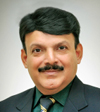 Dr. G. Shreekumar Menon, IRS (Rtd), Ph.D. (Narcotics)
Former Director General of National Academy of Customs Indirect Taxes and Narcotics & Multi-Disciplinary School Of Economic Intelligence India; Fellow, James Martin Centre For Non Proliferation Studies, USA; Fellow, Centre for International Trade & Security, University of Georgia, USA; Public Administration, Maxwell School of Public Administration, Syracuse University, U.S.A.; AOTS Scholar, Japan. He can be contacted at shreemenon48@gmail.com
 Write Comment
 E-Mail To a Friend
 Facebook
 Twitter
  Print
Print - Is Drug addiction a chronic brain disease?
- Engineering colleges should explore new horizons
- 1980s AI photo trend goes viral, cyber experts warn users against sharing original photos
- AI readiness in Universities in India
- Why narcotics are part of every terror payload?
- Bombay’s Parsi Opium Dons
- In-Land Group Celebrates 40 Years of Excellence with Grand Anniversary Event in Mangaluru
- Solving India’s Education Crisis
- Rejuvenating The Priestly Class In Sanatana Dharma
- Durandhar’s exploration of hallucinatory drugs
- Race towards a Drug Free Nation
- A Breathalyser for Drugs
- Budget 2026: High Stakes, Global Headwinds and Big Domestic Bets
- Kashmir Bhavan in Bengaluru: A must visit place
- "MAI and I" Book of Angelic Emotions
- Draupadi Murmu - The New ’President of India’
- Anthony Ashram in the city grows a classic museum
- First College of Fisheries in India - A Golden Jubilarian
- Flushing Meadows - A Vintage Mansion
- The Colonel’s Bequest
- A Mangalorean PM and his RBI Governor Brother: The Extraordinary story of the Benegal Brothers
- There is no higher religion than Truth: Theosophical Society
- L’affaire - Ashu & Yiju of Mangalore
- Mangalore in Kowloon
- 1568 to 2018 AD: 450 years of Christianity in Mangaluru
- Vice President elect Naidu moves on from nadir to zenith, the phenomenal journey
- Embracing the Outdoors: How Heated Jackets Are Revolutionizing Cold Weather Activities
- Efficient and Sustainable Packaging Solutions with FIBCs
- The Hybrid Kilt Revolution | Where Tradition Gets Trendy
- Affordable Elegance | Embrace Style on a Budget with Cheap Kilts
- Unleashing Style and Functionality | Exploring Tactical Kilts
- Mangalore’s Heroic Lady marks 105th Birthday
- Santa the Christmas spirit
- Geriatric care: Mangalore strikes a fine balance
- The Don Who Made Two Empires to Clash
- CHITRAPUR SARASWATS - A Great Kanara Community
- Our new President Ram Nath Kovind’s significant journey to Rashtrapathi Bhavan
- Marriages made in heaven, big fat weddings made in India
- Eid insight - The giver of glad tidings


- Local Search
- Classifieds
- CITY INFORMATION
- TRAVEL
- TOURIST INFORMATION
- HEALTH CARE
- MISCELLANEOUS

© 2024 All rights reserved. MangaloreToday