




Durandhar’s exploration of hallucinatory drugs
Durandhar’s exploration of hallucinatory drugs
Mangalore Today News Network
By Dr. G. Shreekumar Menon
Mangaluru, March 25, 2026: The intersection of narcotic hallucinations and terrorism has been brilliantly depicted in the current blockbuster movie Durandhar 2. The film has effectively portrayed the physiological effects of drugs on addicts and the broader geopolitical phenomenon known as narco-terrorism, where drug trafficking funds violence. Drugs and narcotics can be used to induce violent behavior, in extremist groups, while the trafficking of these substances funds terrorism-related activities. One of the key elements that made Durandhar 2 a global super hit, is the frightening hallucinatory fighting scenes involving Hamza Ali Mazari (Ranveer Singh) and Pinda (Udaybir Sandhu) When Pinda meets Hamza in Lyari in Pakistan, he is a chronic drug addict, as also active on the Indo-Pak drug trafficking circuit.
The electrifying bathroom killing sequence happens in the chapter called “Ghosts from the Past”. Hamza’s celebration party at his Lyari residence, culminates in the two friends getting into a brawl in a bathroom and Pinda suffering from a sudden bout of drug-induced hallucination.
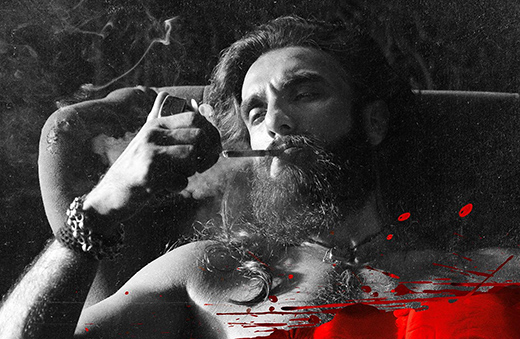
The drug-induced hallucinatory visions makes Pinda see Hamza’s ashy face, white locks, and black veins - almost like a harbinger of death.
Hallucinogens are a class of drugs that changes a person’s awareness of their surroundings. Also known as psychedelics, they alter a person’s thoughts and feelings, as well. Some hallucinogens are human-made (synthetic), and some come from naturally occurring compounds found in certain plants and fungi.
Hallucinations are a common side effect of many drugs. Hallucinations are sensations or perceptions that are not real. These perceptions are created in a person’s mind and can convince them of a reality that does not exist. Hallucinations can make someone believe they are seeing, hearing, feeling, or smelling things that actually do not exist.
Hallucinations can be very upsetting and highly disturbing. Drug abusers call it as a “bad trip”. There are 5 types of hallucinations that affect chronic users - Auditory hallucinations: Visual hallucinations, Olfactory hallucinations, Gustatory hallucinations, and tactile hallucinations. What is depicted in Durandhar 2 excellently is the visual hallucination aspect. A hallucinatory bad trip is an acute adverse psychological reaction to psychoactive substances, marked by intense fear, paranoia, panic, and disturbing visual distortions. Chronic adverse reactions to hallucinogens include psychosis, depressive reactions, acting out, paranoid states and “flashbacks”, which are re-experiences of the perceptual changes encountered while intoxicated with a hallucinogen. This response is now termed “hallucinogen persisting perception disorder.”
The drug Captagon (Fenethylline), often associated with ISIS fighters and militant groups in Syria and the Middle East, fall into the category of synthetic stimulant/hallucinogen, which are known to cause hallucinations, increased aggression, and violent behavior. Being under the influence of a hallucinogen or psychedelic is commonly referred to as ‘tripping’. The Hallucinogens or Psychedelics target specific centres of the brain to alter its understanding of sensory input. For instance, a person may be looking at a blank wall, but their hallucinating brain may interpret the blank wall as moving and swirling, and they might also be hearing noises that aren’t really there. This is what happens to Pinda in the movie. He is unable to see a normal Hamza but instead sees a demonic figure, with horrifying facial features and fast changing facial expressions. The film does not disclose what drug Pinda consumed, to become totally overwhelmed by hallucinations. It could possibly be Cocaine, which can cause severe drug-induced hallucinations. Cocaine-induced transient hallucinations (CIH) are a frequent complication following cocaine intake that is associated with addiction severity.
In the 1983 film Scarface, cocaine use is portrayed as a major factor in Tony Montana’s mental and physical downfall, characterized by intense paranoia, erratic behavior, and, implicitly, hallucinatory states. Tony Montana the fictional character in the movie Scarface, is played by actor Al Pacino. The film documents addiction’s neurobiological consequences: dopamine dysregulation, eroded judgment, and complete identity dissolution. Aditya Dhar’s direction captures the operatic intensity of addiction’s psychological unravelling, moving beyond mere surface depiction to explore the interior collapse of Pinda’s mind. The colour palette shifts and sound design warps, reinforcing psychological disintegration. The audience can see the complete dissolution of identity, agency, and reality itself, positioning addiction as fundamentally dehumanizing. Pinda’s world had become all about drug trafficking to Punjab, drug dealing, drug abuse, betrayals, violence, and untimely deaths all a part of his sordid world.
The movie Durandhar 2 sends a powerful anti-drugs message “the high is fake; the damage is real”.
 Dr. G. Shreekumar Menon, IRS (Rtd), Ph.D. (Narcotics)
Former Director General of National Academy of Customs Indirect Taxes and Narcotics & Multi-Disciplinary School Of Economic Intelligence India; Fellow, James Martin Centre For Non Proliferation Studies, USA; Fellow, Centre for International Trade & Security, University of Georgia, USA; Public Administration, Maxwell School of Public Administration, Syracuse University, U.S.A.; AOTS Scholar, Japan. He can be contacted at shreemenon48@gmail.com
 Write Comment
 E-Mail To a Friend
 Facebook
 Twitter
  Print
Print - Engineering colleges should explore new horizons
- 1980s AI photo trend goes viral, cyber experts warn users against sharing original photos
- AI readiness in Universities in India
- Why narcotics are part of every terror payload?
- Bombay’s Parsi Opium Dons
- In-Land Group Celebrates 40 Years of Excellence with Grand Anniversary Event in Mangaluru
- Solving India’s Education Crisis
- Rejuvenating The Priestly Class In Sanatana Dharma
- Durandhar’s exploration of hallucinatory drugs
- Race towards a Drug Free Nation
- A Breathalyser for Drugs
- Budget 2026: High Stakes, Global Headwinds and Big Domestic Bets
- India’s Court Backlogs Keep Drug Lords On The Streets
- Kashmir Bhavan in Bengaluru: A must visit place
- "MAI and I" Book of Angelic Emotions
- Draupadi Murmu - The New ’President of India’
- Anthony Ashram in the city grows a classic museum
- First College of Fisheries in India - A Golden Jubilarian
- Flushing Meadows - A Vintage Mansion
- The Colonel’s Bequest
- A Mangalorean PM and his RBI Governor Brother: The Extraordinary story of the Benegal Brothers
- There is no higher religion than Truth: Theosophical Society
- L’affaire - Ashu & Yiju of Mangalore
- Mangalore in Kowloon
- 1568 to 2018 AD: 450 years of Christianity in Mangaluru
- Vice President elect Naidu moves on from nadir to zenith, the phenomenal journey
- Embracing the Outdoors: How Heated Jackets Are Revolutionizing Cold Weather Activities
- Efficient and Sustainable Packaging Solutions with FIBCs
- The Hybrid Kilt Revolution | Where Tradition Gets Trendy
- Affordable Elegance | Embrace Style on a Budget with Cheap Kilts
- Unleashing Style and Functionality | Exploring Tactical Kilts
- Mangalore’s Heroic Lady marks 105th Birthday
- Santa the Christmas spirit
- Geriatric care: Mangalore strikes a fine balance
- The Don Who Made Two Empires to Clash
- CHITRAPUR SARASWATS - A Great Kanara Community
- Our new President Ram Nath Kovind’s significant journey to Rashtrapathi Bhavan
- Marriages made in heaven, big fat weddings made in India
- Eid insight - The giver of glad tidings



- Local Search
- Classifieds
- CITY INFORMATION
- TRAVEL
- TOURIST INFORMATION
- HEALTH CARE
- MISCELLANEOUS

© 2024 All rights reserved. MangaloreToday