
RBI proposes stop switch, trusted person approval to curb bank fraud
Mangalore Today News Network
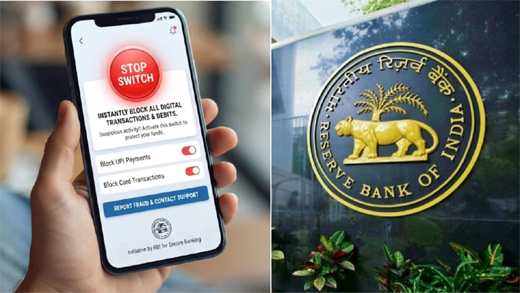
Mumbai, November 27, 2026: The Reserve Bank of India (RBI) has proposed a series of safeguards to curb digital payment frauds, including a system requiring banks to obtain approval from a customer-designated trusted person for large fund transfers. It has also proposed an account-wide ’stop’ switch that would allow customers to immediately block outgoing transactions if they suspect their accounts have been compromised.
The proposals are part of the draft Reserve Bank of India (Commercial Banks – Responsible Business Conduct) Fifth Amendment Directions, 2026. The proposed framework aims to give customers greater control over digital payment channels and transaction limits while expanding the circumstances under which banks can be held liable for fraudulent transactions.
Under the proposed Trusted Person Mechanism, account holders can voluntarily nominate a trusted person to provide an additional layer of authentication for transactions. Once activated, every fund transfer above the specified threshold will trigger an alert to the nominated person, who will have one hour to approve or reject it.
Transactions that do not receive approval within the stipulated time will be automatically cancelled. The mechanism will cover physical and digital fund transfers above the prescribed threshold but exclude UPI payments, merchant transactions and existing recurring mandates. The trusted person will not bear any financial liability for approving or rejecting a transaction.
Account-wide ’stop’ switch
The RBI has also proposed an account-wide stop facility that customers can activate through bank branches, ATMs, internet banking, mobile applications and Interactive Voice Response (IVR) services.
Once activated, the facility will block outgoing payments, new mandates and UPI registration on third-party applications. However, incoming credits, existing recurring mandates and bank-initiated recoveries will continue.
Reactivating the account will require stringent authentication and a risk-based cooling-off period. The RBI has dropped an earlier proposal to impose a one-hour delay on fund transfers.
Greater control over digital transactions
Under the draft guidelines, customers will be able to activate or deactivate individual digital payment channels, set time-based restrictions and establish transaction limits based on payment channels, beneficiaries or daily usage.
Similar controls will apply to debit, credit and prepaid cards, covering domestic and international transactions, ATM withdrawals, point-of-sale (PoS), online and contactless payments. Gift and transit prepaid payment instruments (PPIs) will be excluded.
Digital payment channels will remain disabled by default for newly opened accounts. Banks will prescribe transaction limits for the first 24 hours after activation. Newly issued cards will initially be enabled only for domestic, contact-based ATM and PoS transactions.
Expanded bank liability for fraud
The RBI has also proposed a broader definition of bank negligence in cases of digital payment fraud.
Banks may be held liable for failures involving multi-factor authentication, customer-defined security controls, fraud alerts, round-the-clock reporting facilities and timely action on customer complaints.
Failure to block payment channels following repeated unsuccessful login attempts will also fall under the proposed negligence framework.
System malfunctions, security breaches on the bank’s side and collusion involving bank employees or service providers will also attract liability under the proposed rules.
The proposed directions will apply to commercial banks, excluding small finance banks, payments banks, regional rural banks (RRBs) and local area banks.