
Play national song before national anthem: New ’Vande Mataram’ guidelines
Mangalore Today News Network
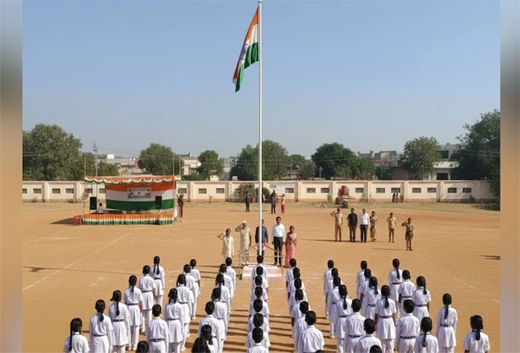
New Delhi, Feb 11, 2026: ’Vande Mataram’, the national song, must be played before the national anthem, i.e., ’Jana, Gana, Mana’ at all government events and in all schools, the Union Home Ministry said in new rules issued Wednesday morning. The new rules also require all persons to stand when ’Vande Mataram’ is played.
The national song must now also be played at civilian awards ceremonies, like the Padma awards, and all other events attended by the President, during their arrival and departure. It will also be played in public spaces like cinema halls, though standing up is not mandatory in this instance.
And all six stanzas, including the four removed by the Congress in 1937, will be played.
Last month sources said the government planned to extend protocols covering the national anthem – under the Prevention of Insults to National Honour Act – to ’Vande Mataram’.
And, under the law, any person who disrupts, or prevents others from respecting, the national anthem (and now the national song) can be sentenced to a maximum of three years in jail.
The ’Vande Mataram’ row
The directive, and the inclusion of those four stanzas, will likely kick up a row, particularly as there was a massive fight between the ruling BJP and the Congress on this topic last year.
This was after Prime Minister Narendra Modi accused his predecessor, Jawaharlal Nehru, of having followed Muhammad Ali Jinnah in opposing the song because it could "irritate Muslims".
The BJP subsequently shared letters from Nehru to back its claim and the exchange turned rancorous after a Parliament ’debate’ on the 150th anniversary of the song being written.
The axed sections referenced three Hindu goddesses, including Durga, which offers political a subtext to the row ahead of the Assembly election in Bengal that is expected in March/April.
The Congress responded by claiming the BJP and its ideological mentor, the Rashtriya Swayamsevak Sangh, routinely avoids the song; party boss Mallikarjun Kharge called it "deeply ironic that those who today claim to be guardians of nationalism never sang ’Vande Mataram’..."
Congress leader Priyanka Gandhi Vadra responded with a fierce counter in Parliament, accusing the BJP of trying to gain brownie points ahead of next year’s Bengal election.
She also accused the Prime Minister and BJP of ’selectively quoting Nehru’, referring to social media posts highlighting excerpts from his letters and presenting them without context.
The deleted stanzas
On November 7, 1875, Bengali author Bankim Chandra Chatterjee – one of India’s most influential 19th century thinkers – wrote the words to a poem that would become a rallying cry for freedom fighters in the battle to liberate India from British colonial rule.
That song, first published in his 1882 novel ’Anandmath’, was ’Vande Mataram’.
In his six stanzas, Chatterjee paid homage to the divine feminine and cast India as a fierce yet nurturing ’mother’ figure, ("… mataram") offering intellectual, emotional, and physical support.
Chatterjee also made references to the feminine figure’s, or the ’mother’s, ferocity ("…swords flash out in seventy million hands, And seventy million voices roar they dreadful name from shore to shore") and gentleness ("…Mother, giver of ease, laughing low and sweet").
But opening abstract references to the ’mother’ turn concrete in later stanzas, specifically the last two.
Chatterjee refers to the Hindu goddesses Durga, Kamala (or Lakshmi), and Saraswathi, framing them as the feminine guardians of the country, "pure and perfect without peer".
In 1937 the Congress, then led by Nehru, decided in Faizpur to use only the first two stanzas for national gatherings. The argument was that direct references to Hindu goddesses were not well-received by some members of the Muslim community; they were seen as ’exclusionary’.
The BJP has now argued that the exclusions illustrate the Congress’ ’divisive’ plans; the Prime Minister said dropping the stanzas "sowed the seeds of the nation’s division", referring to the Partition.