
Centre’s price cap to make cancer drugs 40–80% cheaper, says Karnataka Health Minister Khader
Mangalore Today News Network
Bengaluru, Oct 10, 2026: The Centre’s decision to cap trade margins on cancer medicines at 30% of the maximum retail price (MRP) is expected to reduce the prices of several anti-cancer drugs by 40% to 80%, offering significant relief to patients and their families, Karnataka Health and Family Welfare Minister U.T. Khader said on Saturday.
Welcoming the National Pharmaceutical Pricing Authority’s (NPPA) move, Khader described it as an important step towards making cancer treatment more affordable and reducing the financial burden on patients.
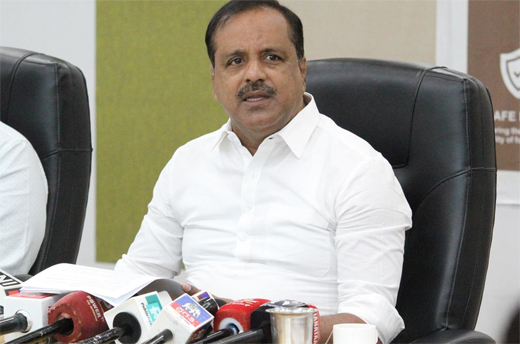
He said the high cost of cancer treatment often forces families to exhaust their savings, borrow money and even sell assets to meet medical expenses.
“Cancer does not affect only the patient; it can devastate the entire family financially,” he said.
Karnataka had urged Centre to regulate prices
Recalling the state government’s efforts to bring down the cost of cancer medicines, Khader said the Health and Family Welfare Department had written to Union Health Minister J.P. Nadda within months of his assuming office, seeking measures to reduce drug prices and bring them under the national price-control framework.
After receiving no response for a month or two, the department compiled details of 253 anti-cancer medicines, including their landing costs and retail prices. The information was subsequently shared at a press conference and forwarded to the Union government, he said.
Khader credited sustained media coverage, public discussion and the efforts of government officials and elected representatives with helping bring the issue to national attention. He urged the media to continue highlighting the disparity between the costs at which medicines enter the supply chain and the prices charged to consumers.
Wide gap between costs and retail prices
Citing examples of the price disparity, Khader said a cancer drug available at around Rs. 2,700 was being sold at a much higher price. He also referred to an injection costing approximately Rs. 3,520 but reportedly priced at Rs. 23,347, while some medicines with a landing cost of around Rs. 3,000 were being sold for as much as Rs. 27,000.
He said the 30% trade-margin cap could substantially reduce patients’ out-of-pocket expenditure, although the actual reduction would depend on the applicable pricing base and implementation of the measure.
The minister pointed out that the financial burden was particularly severe for patients requiring multiple cycles of chemotherapy and repeated injections, with treatment expenses often running into several lakhs of rupees.
He called for coordinated efforts by the Centre, state governments, healthcare authorities and the media to ensure that the benefits of price regulation reach patients.
Khader also urged people to visit hospitals and understand the physical, emotional and financial challenges faced by cancer patients and their families.
Effective implementation of the price cap would be crucial to making life-saving medicines more accessible and affordable, he said.