
Karnataka HC reprimands Ranveer Singh, grants interim relief in Kantara mimicry case
Mangalore Today News Network
Bengaluru, Feb 24, 2026: The Karnataka High Court on Tuesday (February 24, 2026) pulled up Bollywood actor Ranveer Singh for allegedly mimicking a female deity, Chavundi Daiva, portrayed by Kannada actor Rishab Shetty in the film Kantara Chapter-1.
“You (petitioner) were speaking of a deity. If you don’t know what it is, you should study and then speak. You can’t call it a female ghost. That is not correct. You have no right to hurt anybody’s religious sentiments. Will your apology take back all the words and actions? The internet never forgets,” Justice M. Nagaprasanna orally observed.
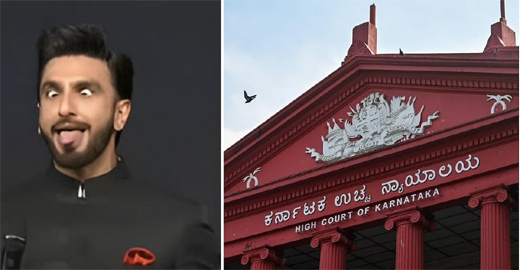
The court, however, directed the police not to take coercive steps against the actor until the next hearing scheduled for Monday (March 2, 2026).
Ranveer Singh has filed a petition challenging the case registered against him by the High Grounds police in Bengaluru over the incident.
The episode occurred on November 21, 2025, during the International Film Festival of India (IFFI) in Goa. While addressing the audience on stage, Ranveer was thanking organisers for the opportunity to promote his upcoming film Dhurandhar. He praised Rishab Shetty’s performance and allegedly mimicked his character depicting the female deity in Kantara Chapter-1, reportedly referring to it as a “female ghost.”
His counsel submitted before the court that the actor had been reckless and had issued an apology immediately after learning about the religious significance of Chavundi Daiva. The advocate further stated that following a private complaint, the concerned court sought a report from the jurisdictional police and subsequently referred the matter for investigation.
The petition contended that Ranveer had no intention of hurting religious or cultural sentiments and that his remarks were meant as appreciation of Rishab Shetty’s performance. It further argued that the video clip recorded at IFFI does not disclose any malicious intent to create disharmony between religions or communities, despite the registration of a case under Sections 196, 299 and 302 of the Bharatiya Nyaya Sanhita (BNS).